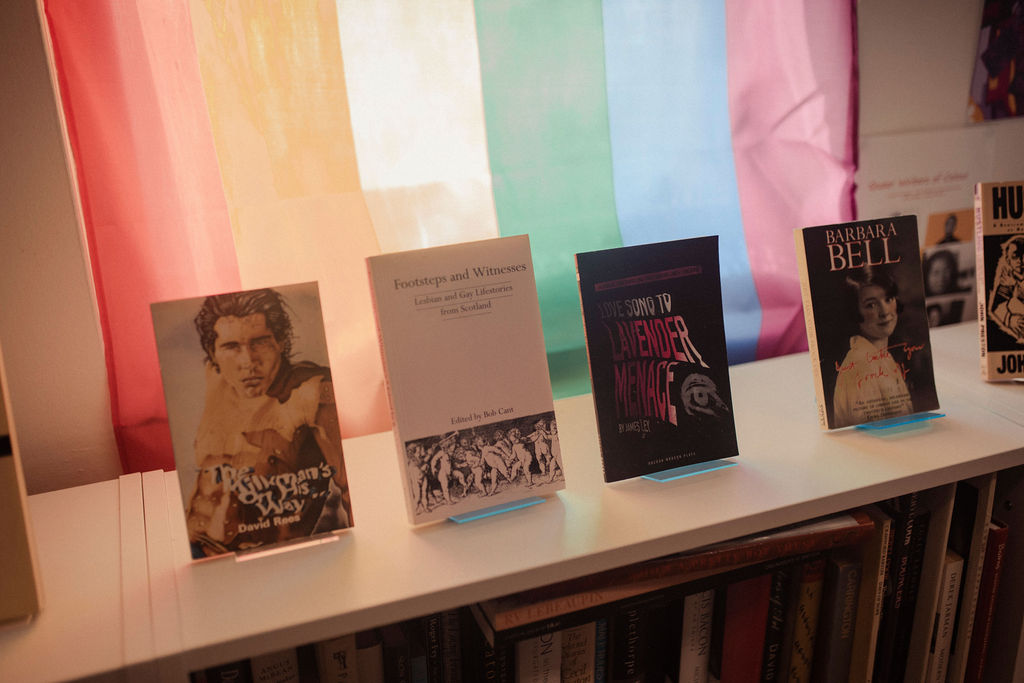

Lurid Editions is an independently owned publisher dedicated to rediscovering forgotten queer works of literature and bringing them back into circulation. One of our Volunteers, Maeve Sheridan, interviewed D-M Withers, the director of Lurid Editions, on the process of publishing and the importance of repairing the queer literature archive. (The conversation has been edited by the interviewee for length and clarity.)
To start, for those who are unfamiliar, could you give me a general overview of what Lurid Editions does and your mission in doing it?
Lurid Editions publishes rediscovered works of queer literature from the 20th century—the 20th-century archive, broadly conceived. We bring books that have fallen out of print back into circulation and provide introductions that contextualise the texts within publishing and literary history. Through publishing, we’re trying to repair some of the gaps and absences in queer literary history by reviving the works by authors who’ve been unjustly forgotten. There’s lots of different types of books that we publish, but they’re all queer; they’re all lurid; it’s very genre diverse, but the thing that connects all of them is their queerness, that they’re being repositioned and brought back to market to hopefully enable readers to enjoy them and rediscover them.
That’s a very powerful thing to be doing today. Do you think that there is anything about these texts, or in them, that you feel is especially pertinent, or could prove useful for the queer community today?
What makes a work that’s been out of print—that’s been forgotten and neglected—relevant, readable and sellable to people today? The answer to this question varies depending on what text it is and the story around it; every book is different. Even so, I think all the books Lurid publish have significance in that they enable readers to connect in a new way with a queer literary past that has been quite circumscribed. This is not to suggest that the Lurid list is comprehensive—it isn’t—but we do spend a lot of time researching and thinking about books that could be republished. We’re not the only publisher doing this work: McNally Editions in the US features a lot of queer rediscoveries, Dead Ink’s Outsider Classics are doing excellent work in this space, as are Boiler House Press, along with reprint pioneers Virago Press, and Persephone, and lists like Faber Editions. Backlist, or what you might call heritage publishing, is a huge part of the market. But I do think that Lurid’s broad curatorial project is something that resonates with readers today, because it’s presented with an explicitly queer lens. Today there’s a much wider consciousness around the lack of access to a queer literary past or a queer cultural heritage, and a desire to recover that heritage. The desire—the yearning for—the queer past is a key facet of queer consciousness in the 21st century. Lurid’s publishing strategy speaks to that energy and that desire, which touches on a need that exceeds the simple pursuit of reading pleasure or intellectual curiosity. As a queer reader myself, whose experience of literature, storytelling and narrative has been structured by lack, I also need to repair these absences and silences to reconstitute myself. Take, for example, In Transit, an experimental non-binary novel by Brigid Brophy first published in 1969. To gloss the ‘plot’ extremely crudely, a sex-shifting narrator goes to the airport with the intention to catch a plane, yet when called to board, they refuse the interpellation. Due to an accident with a cappuccino, that blots out information on their passport that identifies which sex they are, they proceed to undergo a process of ‘sexual amnesia’ and spend the rest of the novel trying to ‘re-member’ it. The novel has a lot of resonance with non-binary and trans realities today, in how it presents ‘sex’ (not gender, as this term was not available to Brophy at the time of writing) as a changeable, malleable and transformable category. Re-publishing the work today provides an access point to a wider literary and cultural history present in the late 60s in which writers were exploring ideas that feel very 21st century—performativity, gender/sex fluidity, opacity—that helps to ground our struggles in a deeper and creative lineage.
Absolutely, here at Lavender Menace, it’s something that we encounter a lot in dealing with texts from the past, and the tension they can have with evolving understandings of queerness and labeling—and trying to figure out how we can categorise a work, or if we even should. Do you have any particular way of understanding these definitions, and does it have any effect on how you go about publishing the works?
Booksellers, archivists, and publishers have over the years put a lot of effort into thinking about this question. How do you categorise a particular title so that it’s discoverable by people? And that’s very difficult, and categories change with the times. I think In Transit, again, is a good example of that because of the decision to put the colours of the trans pride flag on the cover; we wanted people in bookshops to recognise the book as having a connection with transness, at a symbolic level. The need to categorise books in the marketplace is often a bit reductive. Take, for example, A Jingle Jangle Song: it was described by critics at the time as a lesbian novel, but now you’d probably describe Sarah Kumar as bisexual. Our books are, thankfully, stocked in many indie bookshops as well as the inspiring number of bookshops dedicated to LGBTQ+ literature across the UK. Beyond metadata and description, we do want our books to stand out, and be Lurid, take up shelf space and be unapologetically queer. Hence the use of fuchsia and a commitment to camp book design aesthetics, wherever possible.
You were talking about silence in the archive when it comes to queer archiving, and obviously there’s been a lot of work about confronting that and understanding that. Here at Lavender Menace, we understand the difficulties involved. How do you go about finding and selecting texts to publish? What goes into that process?
It’s very different for every single book. The first book Lurid published is called Chase of the Wild Goose. It’s about the Ladies of Llangollen—two Irish women who lived in the late 18th and early 19th century who ran away together and set up home in Llangollen, North Wales, and lived out a cottage core fantasy before it was fashionable. I learnt about the book because I had visited Plas Newydd, their home for over fifty years, and was very captivated by the space and their story. Through this enthusiasm, I discovered that there had been a creative historical biography written about them by an author called Mary Gordon that had been initially published by the Hogarth Press (run by Virginia and Leonard Woolf). I read the book, and loved it, and felt frustrated because it was not more widely available. Gordon died in 1941, so the book was conveniently out of copyright, so all these factors motivated me to set up Lurid. I wanted to put Chase back to where it should be, next to The Well of Loneliness and Orlando on the queer bookshelf, two books of the 1920s/30s that are its natural bedfellows. Hopefully because of our publication, it now is!
With A Jingle Jangle Song, I was introduced to queer book historian and playwright Chris Adams, who inherited the rights to the Villa-Gilbert estate. He sent me a copy of the book to read; I loved it—there’s a pattern here, obviously. Reading something, loving something. I think it’s what all people who publish anything do—or want to do. I ask well-read queers for their advice. We are always looking for suggestions and ideas. Another really good source is Lesbian Literature, a bibliography of lesbian literature collated by Barbara Grier. Grier wrote under the pseudonym Jean Damon and had a column in 60s lesbian magazine The Ladder called ‘Lesbiana,’ in which she reviewed books that featured any kind of lesbian content. That’s a good source of information about lesbian books published in the late 1950s-70s.
Is there a book or author that’s a dream publication for you, something that you wish you could publish that you might have in the back of your mind, but haven’t gotten to?
Well, that would be giving things away. We did recently miss out on the rights for a book called Adonis García by Louis Zapata, which I was really gutted about because it’s a brilliant queer autofiction from Mexico. We managed to find out who owned the English-language rights, but unfortunately, we couldn’t secure them. I look forward to seeing a new edition of that book soon, whoever has snagged them. So that’s the book that I would have liked to have published.
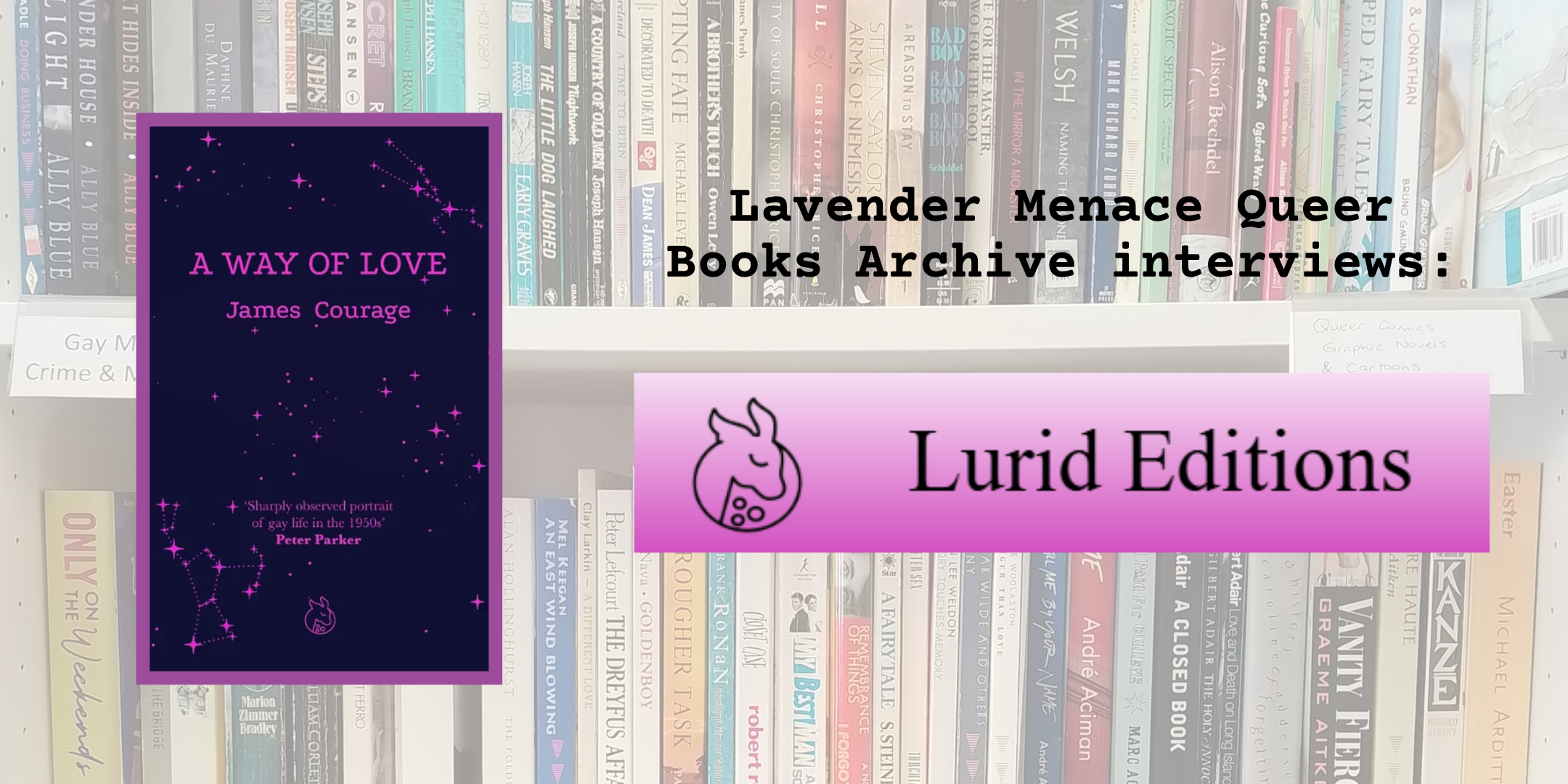
Well, speaking of what’s in the pipeline—could you tell me some more about your next release, James Courage’s A Way of Love?
It’s a beautiful novel by a criminally neglected author. James Courage’s work was published by the leading literary publishers of his day, but after he died in 1963, his literary legacy basically sunk without a trace. His works were subsequently suppressed by family members, who weren’t happy with some of the explicit homosexual themes in some of his novels. His writing style is a little bit like Elizabeth Taylor with its sharp observation of human foibles and great dialogue. I think he wanted to be a playwright, but he had to essentially pivot into novel writing. You can see the influence of the theatrical writing in A Way of Love through dialogue. It also has a vivid sense of time (late 1950s) and place (London, but also Suffolk). It’s an intergenerational story between an older man, Bruce Quantock, who is an architect—worldly and experienced—and his younger lover, Philip Dill, who is much more explosive and emotionally unstable. They meet by surprise one night at a concert at Royal Festival Hall in London on a very beautiful crisp cold December evening, and the story unfolds from there. The novel speaks to the straight society of the time by demanding acceptance within a time when homosexual acts between men were criminalised; it’s also queer-coded, so if you are familiar with the lexicon, you will understand its secret language in a different way. Like many queer books published in the twentieth century, A Way of Love serves as an archive of other queer artefacts within its narrative space. There are many references to other writers and other queer novels that were obviously placed there so that those reading could look further into queer culture and literature, if they wanted to. Hopefully more people will read it now and enjoy it and make those connections and engage with that period of history as well.
I’m sold, I’m sold. And I understand if there is anything you can’t talk about, but is there anything else on the horizon for Lurid Editions?
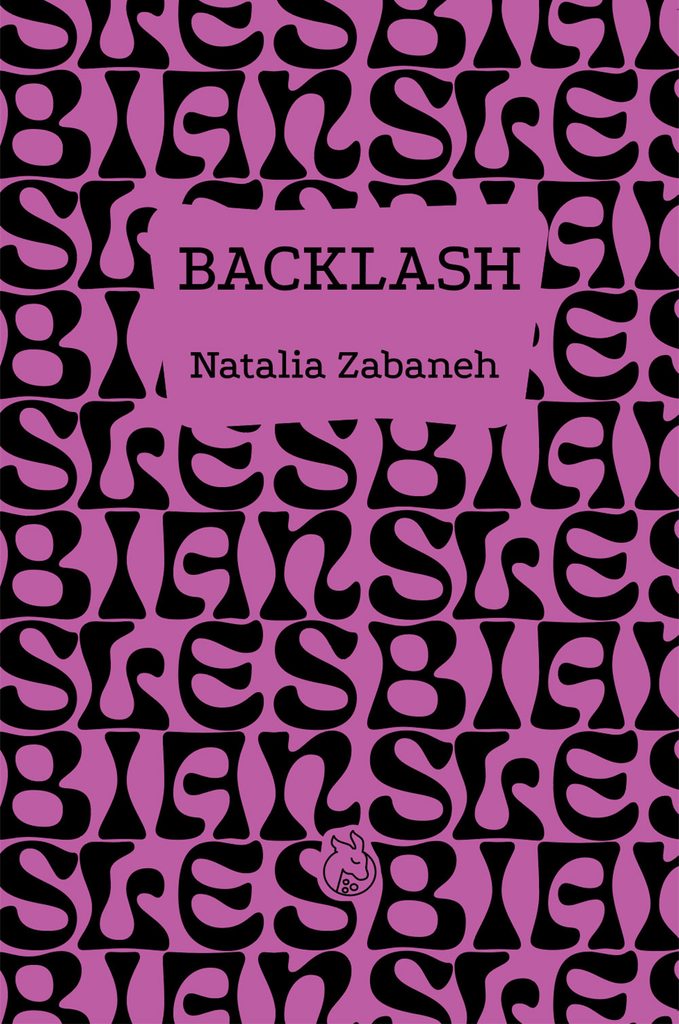
Yes, we’ve got a book called Backlash that’s being published in February, in time for LGBTQ+ History Month. It’s her [Natalia Zabaneh’s] only novel and quite unique in that she is our only living author. It was published in 1970 and features another intergenerational relationship. There was quite a lot of publishing about intergenerational, slightly disturbing lesbian and gay relationships around 1968 to 1973, probably because of The Killing of Sister George, which gave popular visibility to the lesbian underground, and the decriminalisation of male homosexuality in 1967, which made gay male lives visible. There are a few similar books around that time which explore an older woman/younger woman dynamic, of which Backlash is probably the best example.
The novel itself is essentially a character study of the older lady, Margaret, a chemistry teacher at a girls’ school and her relationship with the younger English teacher, Kate Douchet. The novel is about their relationship, and it’s surprisingly sexually explicit given the time it was published. Tonally, it’s a slightly different book to the kinds that we’ve published to date; the pleasure that you get from reading the novel comes from the fact that the main character is awful and dastardly, so you keep turning the page and you think, ‘Oh my God, what’s she gonna do or say next?’
Then we’re publishing a book called Rage by Lorenza Mazzetti in May 2027, a queer anti-fascist autofiction. Mazzetti was also a filmmaker and founder of the Free Cinema movement; her work is referenced in Ali Smith’s novel Summer. She died in 2020. Rage is the story of her adolescence, and is charged with a wild, distorted and boundary-pushing energy while being grounded in the self. It’s more of a queer book than a gay book. It’s probably the queerest book, I would say, that we’ve published, in that it’s challenging all kinds of normativities.
A Way of Courage is now available to order from the Lurid Editions website.